फील्ड रिपोर्ट
18 Fascinating Facts About the Canada Goose
The Canada Goose is instantly recognizable for its V-formation flocks, distinctive white chin strap, and loud, recognizable honks. But beyond these well-known traits, there’s a wealth of intriguing details about these waterfowl that many people don’t know.
Patrick Kennedy
लेखक
प्रकृति नोट
नीचे पूरी वन्यजीव कहानी या रिपोर्ट पढ़ें।
विषय
वन्यजीव
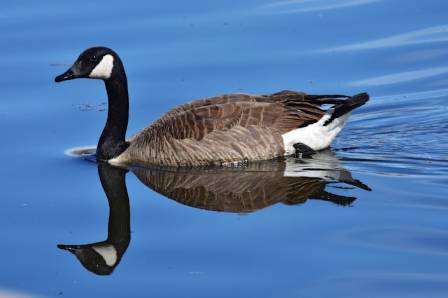
The Canada Goose is instantly recognizable for its V-formation flocks, distinctive white chin strap, and loud, recognizable honks. But beyond these well-known traits, there’s a wealth of intriguing details about these waterfowl that many people don’t know.
You’ll often spot Canada Geese in parks, on golf courses, in farmlands, and other open areas across North America—many of them stay in these spots year-round. When choosing a mate, they use a behavior called assortative mating, and once paired, they typically stay together for more than two decades, only separating if one mate dies. Their young (known as goslings) are quick learners, and they imprint on the first moving object they see after hatching. Even more impressively, Canada Geese can shut down one side of their brain, letting them sleep with one eye open to watch for danger. Below, we’ll dive deeper into these facts and more, uncovering what makes the Canada Goose such a unique bird.
1. The Canada Goose Has 20,000 to 25,000 Feathers
A single Canada Goose is covered in 20,000 to 25,000 feathers—far more than smaller birds like sparrows or wrens, which only have 7,000 to 10,000 feathers.
These feathers fall into two main types: flight feathers and down feathers. Flight feathers are strong and rigid, helping the goose generate lift and stay balanced while flying; they also repel water and create the bird’s distinctive black-and-gray markings. Down feathers, on the other hand, are soft and fluffy, acting as insulation to keep the goose warm in cold waters and freezing temperatures.
Every year, Canada Geese go through a molting process: they shed their old feathers and grow new ones, ensuring their plumage stays in top condition for flight, warmth, and protection.
2. Canada Geese Cannot Fly When They Molt
Unlike most birds, which shed their flight feathers gradually, Canada Geese lose all their flight feathers at once in late summer. This leaves them grounded—unable to fly—for about four weeks.
Being flightless is risky, as they can’t escape predators like coyotes, foxes, bears, or eagles by flying away. To stay safe during this period, Canada Geese often move to open bodies of water that have plenty of food. The water lets them walk to forage for food on shore and float away quickly if a predator approaches.
Molting timing varies slightly by group: non-breeding geese molt first. Adult geese with offspring molt soon after, so they regrow their flight feathers around the same time as their goslings—about 70 days after the young hatch. This way, the whole family can fly together once the goslings are ready.
3. They Have Special Visual Functions
Canada Geese have monocular vision—just like American robins which means they use each eye independently to see. This gives them a wide field of view, letting them spot threats or food sources that might be missed with binocular vision (where both eyes focus on the same object).
They can also see over 180 degrees both vertically and horizontally, and they’re able to detect ultraviolet light waves. These visual abilities are a huge advantage during flight, as they let the geese scan large areas from far away, spot predators early, and navigate through open skies.
Goslings learn to use their vision quickly: they follow the gaze of adult geese to identify threats, find food and water, and understand social cues. Even though Canada Geese might look identical to humans, they can recognize individual members of their flock and goslings can tell their siblings apart by their appearance.
4. They Can Shut Down One Side Of Their Brain
Canada Geese have a unique sleep ability called unihemispheric slow-wave sleep (USWS). This lets them shut down one hemisphere of their brain while the other stays active. As a result, they can sleep with one eye open, keeping watch for predators or other dangers while still getting the rest they need.
This adaptation is crucial for their survival, especially during migration or when resting in open areas where threats are common. It means the geese never have to let their guard down completely, even when they’re tired.
5. Canada Geese Use Assortative Mating
Canada Geese reach maturity around 2 or 3 years old, and when it’s time to choose a mate, they practice assortative mating—meaning they pick a partner of similar size. This behavior is thought to offer genetic advantages, as mating with a partner that has similar physical traits (called phenotypic similarities) may help pass down beneficial characteristics to their offspring.
Females also play an active role in choosing a mate: they look for males that put on impressive displays, such as spreading their wings, honking loudly, or puffing out their chests. These displays signal that the male can protect the female and their future young. Once a female makes her choice, she shows it by following the male on land and in water, cementing their bond.
6. They Are Monogamous For A Decade Or Longer
Once a Canada Goose finds a mate, the pair stays together for life, raising one brood of 2 to 8 eggs each year. On average, these pairs remain bonded for 10 to 25 years—far longer than many other bird species. If one mate dies, the surviving goose will eventually find a new partner, though it may take time to form a new bond.
Goslings stay with their parents until the spring after they hatch. After that, they join groups of other young geese (called juveniles) and stay there until they’re old enough to find their own mates and start families.
7. Canada Geese Show Distress Over Social Conflicts
Canada Geese have strong social bonds, and they react physically when their mates or relatives are in conflict. Studies have shown that their heart rates rise when they see a loved one fighting or facing a threat, this physiological change is a clear sign that they feel distress over the conflict.
This response highlights the deep social connections within Canada Goose flocks. They don’t just coexist; they care about the well-being of their family members and flockmates, showing a level of emotional awareness that’s surprising in many birds.
8. They Have Sensitive Bills
At the tip of a Canada Goose’s bill, there are small structures called Herbst corpuscles. These are sensory receptors that detect movement and pressure changes in soil and water, acting like a “remote touch” system. This helps the geese find food such as seeds, insects, or aquatic plants—even when it’s hidden under dirt or water.
While their sense of smell isn’t as strong as that of animals like dogs, Canada Geese (and other waterfowl) can still detect odors, including the pheromones of potential mates. If they smell something unpleasant—like the scent of lavender, they’ll shake their heads to try to clear the smell, showing they find it uncomfortable.
9. Sizes & Color Shades Of The Canada Goose Vary By Region
There are 11 subspecies of the Canada Goose (note: they’re often incorrectly called “Canadian Geese”). These subspecies vary significantly in size and color.
The largest subspecies is the giant Canada Goose (Branta canadensis maxima), which can weigh up to 12.5 pounds. The smallest is the cackling Canada Goose (Branta hutchinsii), which weighs only around 4 pounds.
In general, Canada Geese that nest farther north tend to be smaller, while those that live in western regions have darker plumage. These differences help the geese adapt to their specific environments—smaller bodies may be better for surviving cold northern winters, while darker feathers might help western geese blend into their forested or rocky habitats.
10. They Have A Distinctive White Chinstrap Mark
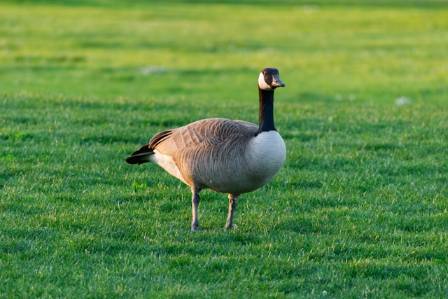
No matter the subspecies, Canada Geese share a few key physical traits that make them easy to identify. Both males and females have gray-brown bodies, black tails and heads, and black feet, legs, and bills. Their long black necks are marked with a unique white chinstrap (or cheek patch) that stands out against their dark feathers.
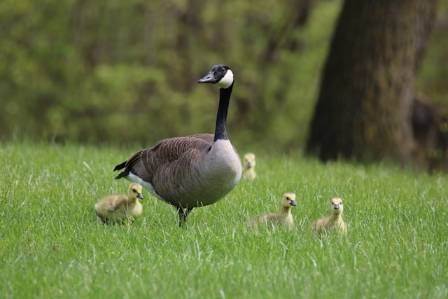
Goslings look very different from adults: they’re light yellow with green-gray heads. As they mature, their feathers darken, and by the time they’re adults, they’ll have the classic black-and-gray plumage and white chinstrap.
11. Canada Geese Have A Long Lifespan
Canada Geese have a relatively long lifespan for birds, living 10 to 25 years in the wild. There are even reports of some geese living longer—for example, a female Canada Goose that was banded (tagged for tracking) in 1969 was found 30 years and 3 months later, making her one of the oldest known Canada Geese on record.
This long lifespan is likely due to their size (larger birds often live longer), their ability to avoid predators (thanks to their speed, aggression, and group behavior), and their adaptability to different habitats.
12. Goslings Can Imprint On Different Species
When goslings hatch, they immediately bond with their mother for warmth and food. This process, called imprinting, is crucial: it helps them learn how to behave like geese, recognize their family, and develop a sense of identity.
However, imprinting isn’t limited to their parents. Goslings will imprint on any moving object they see right after hatching—this can include humans, other animals, or even inanimate objects like colored balls. Once they imprint on something, they’ll identify with it for the rest of their lives, often following it around and treating it like a parent.
13. Goslings Are Quick Learners
As soon as goslings hatch and imprint on their parents, they start learning essential skills. They mimic adult geese, and on their first day of life, they already know how to swim, they can even dive underwater 30 to 40 feet deep to escape danger or find food.
By the time they’re 2 or 3 months old, their flight feathers have fully grown, and they learn to fly. This timing is perfect, as it lets them join their parents on long migration trips, where they’ll learn how to navigate and find food along the way.
14. Goslings Form Gang Broods
As goslings get older, they start to spend less time with their parents and more time with other young geese. These groups are called “gang broods,” and they can have anywhere from 20 to 100 goslings.
Even though the goslings are in a group, their parents don’t abandon them. Instead, the adult geese take turns watching over the gang brood while the others forage for food. This setup lets the goslings socialize with their peers and learn from each other, while still having adult protection.
15. Canada Geese Have Aggressive Behavior
Canada Geese are bold and protective, they won’t hesitate to defend their goslings, nests, or themselves from threats. When a goose feels threatened, it will stretch its neck forward, pump its head up and down, and spread its wings wide to make itself look bigger. If the threat doesn’t back off, the goose will charge, biting, slapping with its wings, and kicking with its legs to drive the danger away.
They also use loud honks to communicate—these honks can signal aggression during fights, warn other geese of danger, or keep the flock together. During molting season, when they can’t fly, their aggression becomes even more important: if their defensive tactics don’t work, they’ll retreat to the water, where they can float to safety.
16. Canada Geese Fly In V-Formations To Conserve Energy
When Canada Geese migrate, they fly in a V-formation and honk to communicate with each other. This formation isn’t just for show—it’s a smart way to save energy. The lead goose cuts through the air, reducing wind resistance for the geese behind it. This creates a “draft” that lets the other geese glide more easily, using less energy.
When the lead goose gets tired, it moves to the back of the formation to rest, and another goose takes its place at the front. This rotation ensures that no single goose gets overworked, letting the flock fly long distances without tiring out. The honks help the geese stay in formation and communicate if they need to adjust their position.
17. They Are Hazardous To Airplanes
Canada Geese pose a serious risk to airplanes, especially because they fly in large flocks. Most bird-airplane collisions happen during takeoff or landing, but they can occur at any time—Canada Geese can fly at altitudes over 27,000 feet, which is the cruising height of many commercial planes.
When a flock of geese hits an airplane’s windshield or engine, the results can be catastrophic. The impact can crack the windshield, damage the engine (leading to engine failure), or even cause the plane to crash. For this reason, airports often use methods like loud noises or trained dogs to keep Canada Geese and other birds away from runways.
18. Not All Canada Geese Migrate
Unlike in the past, many Canada Geese now migrate shorter distances—or not at all. They’ve adapted to living in grasslands, farmlands, and urban/suburban areas year-round, as these spots offer consistent food and milder weather.
If a group of geese finds a reliable food source (like manicured lawns with plenty of grass) and the weather stays favorable (with non-frozen water), they may stay in the same area indefinitely. Many Canada Geese are now “partially migratory”: the geese that live in the northernmost parts of North America are more likely to migrate long distances if the winter gets too cold, while those in southern regions often stay put.
When Canada Geese do migrate, they can travel up to 1,500 miles in a single day if the weather is ideal. Their average migration speed is about 40 miles per hour, but with a strong tailwind, they can fly as fast as 70 miles per hour. They always head to places with non-frozen water and abundant food, ensuring they have everything they need to survive the winter.
Conclusion
The Canada Goose is a bold, adaptable waterfowl that lives year-round in many parts of North America. Its loud honks and V-formation flights make it a familiar sight (and sound) for many people. These birds use assortative mating to find a partner of similar size, and they stay together for 10 to 25 years, raising a new brood each year.
Goslings are ready to learn from the moment they hatch: they imprint on their parents, learn to swim on their first day, and master flying by 2 to 3 months old. Canada Geese also have unique survival skills, like sleeping with one eye open by shutting down one side of their brain.
From their thousands of insulating feathers to their aggressive defense of their young, the Canada Goose is full of surprises. These traits not only help them thrive in diverse environments but also make them one of the most fascinating bird species in North America.
इसी जंगल से और

· hi
2025 में सौर और चंद्र ग्रहण
केली बीट्टी

· hi
गर्मी के ठंडे घूंट: गर्मी से राहत पाने के लिए 6 बेहतरीन ताजगी देने वाले फल जूस किस्में
प्रीत

· hi
लाल गुलाब प्रेम और रोमांस का प्रतीक हैं। पेश है लाल फूलों वाले गुलाबों की हमारी पसंदीदा किस्में।
अक्षय

· en
Most Beautiful Coastal Cities in the World
Julian Cross
· hi
वर्ल्ड माइग्रेटरी बर्ड डे 2025
प्रकाश

· en
8 Expert Tips for Styling Your Sofa Like a Pro
Mike