फील्ड रिपोर्ट
Eight Secrets of the Taj Mahal
For anyone visiting India for the first time, the Taj Mahal is an essential stop. This iconic mausoleum in Agra stands as India’s most celebrated monument and a timeless symbol of love. Commissioned by Mughal Emperor Shah Jahan between 1632 and 1647, it was built in memory of his beloved wife, Mumtaz Mahal, who tragically died during childbirth. Despite its global renown, many aspects of the Taj Mahal’s history remain mysterious. Here are some intriguing insights about this marble masterpiece.
Morgan Ellis
लेखक
प्रकृति नोट
नीचे पूरी वन्यजीव कहानी या रिपोर्ट पढ़ें।
विषय
वन्यजीव
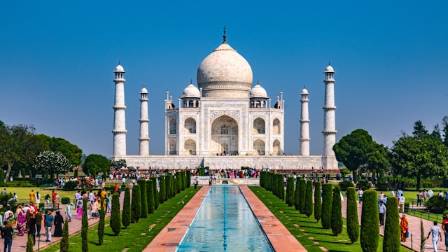
For anyone visiting India for the first time, the Taj Mahal is an essential stop. This iconic mausoleum in Agra stands as India’s most celebrated monument and a timeless symbol of love. Commissioned by Mughal Emperor Shah Jahan between 1632 and 1647, it was built in memory of his beloved wife, Mumtaz Mahal, who tragically died during childbirth. Despite its global renown, many aspects of the Taj Mahal’s history remain mysterious. Here are some intriguing insights about this marble masterpiece.
Optical Illusions Abound
The Taj Mahal’s architects and artisans were masters at manipulating perspective. When you first approach the main gateway, the monument seems much closer and larger than it really is. Yet, as you move nearer, it appears to shrink—a visual trick that defies expectations. Similarly, the minarets that surround the tomb look straight, but in fact, they lean slightly outward. This clever design ensures both aesthetic symmetry and structural safety, so that in the event of an earthquake, the towers would fall away from the central tomb.
The Most Famous Legend May Be False
A popular story claims that Shah Jahan, determined to make the Taj Mahal unmatched in beauty, mutilated the hands and eyes of the craftsmen to prevent them from replicating it. While this tale adds dramatic flair to the romance, historians have found no evidence to support it, making it more myth than fact.
The Cenotaphs Are Empty
Inside the Taj Mahal, the cenotaphs of Mumtaz Mahal and Shah Jahan sit in an eight-sided chamber, surrounded by delicate marble lattice work and intricate inlays of semi-precious stones. But these are only symbolic monuments. The actual tombs rest in a quiet crypt below, at the garden level, hidden from view.
Nearly Perfect Symmetry
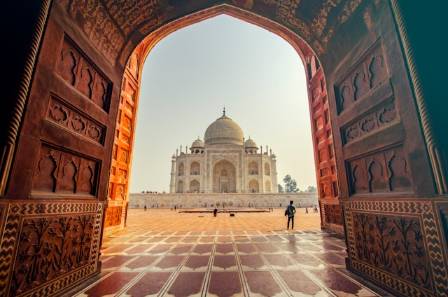
The Taj Mahal is a pinnacle of Mughal design, built with meticulous symmetry. The domed tomb is flanked by minarets, and a central reflecting pool mirrors the main structure. The gardens are divided into four quadrants, while twin red sandstone buildings—a mosque to the east and a guesthouse to the west—maintain visual balance. However, Shah Jahan’s cenotaph is placed slightly west of the central axis, breaking perfect symmetry and sparking speculation that he may not have intended to be buried there at all.
Regular “Facials” for the Monument
Over time, pollution and age have dulled the Taj Mahal’s luminous white marble, giving it a yellowish-brown tint. To restore its glow, the monument occasionally receives a mud treatment called multani mitti, a traditional Indian skincare remedy. Applied and scrubbed off with brushes, this treatment removes discoloration and brings back the Taj’s brilliant sheen.
Changing Colors Throughout the Day
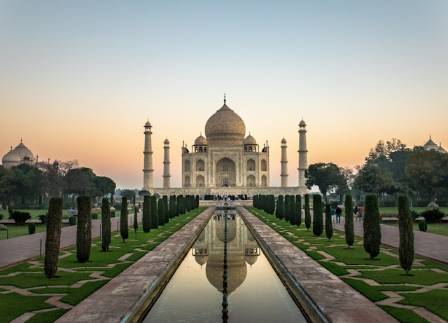
One of the Taj Mahal’s most captivating features is its shifting color. Depending on the light, the marble transforms: soft gray and pale pink at dawn, dazzling white at midday, warm orange-bronze at sunset, and a translucent blue under the moonlight. Special viewing tickets are even offered for full moon nights and eclipses.
A “Black Taj Mahal” Was Once Planned
Local lore suggests that Shah Jahan intended to build a mirror image of the Taj Mahal across the Yamuna River, using black marble, where he would be entombed. However, construction allegedly stopped when his son—ironically Mumtaz Mahal’s own child—overthrew him and imprisoned him in nearby Agra Fort. Many historians regard this story as folklore rather than historical fact.
A Monument of Power as Well as Love
While the Taj Mahal is celebrated for its romantic symbolism, it also served as a statement of imperial authority. Shah Jahan’s ordered symmetry and grand scale reflected Mughal power and control. The lavish use of precious materials—crystal, lapis lazuli, Makrana marble, and turquoise—demonstrated his reign’s grandeur, ensuring that the monument was not only a tribute to love but also a showcase of political might.
इसी जंगल से और
· hi
तारों भरी रातें गायब हो रही हैं।
सिया

· en
The Most Beautiful Lighthouses Under the Sunset Around the World
Sunny

· hi
रेखाचित्र बनाने की कला में महारत हासिल करने के लिए एक शुरुआती मार्गदर्शिका
सुचित्रा पाल

· hi
फ्रूट ट्रे प्लेटर कैसे बनाएं
राहुल
· en
Master the Art of Sofa Selection: A Comprehensive Blueprint for Luxury and Ease
Zoe Penelope Blackwell

· hi
समुद्र तट आपके मानसिक स्वास्थ्य के लिए क्यों अच्छा है?
अंशुल