फील्ड रिपोर्ट
How to grow lotus flowers
This article explains how to cultivate lotus flowers in a pond, or even in a small container pond placed in a garden, balcony, or terrace.
Ren Holloway
लेखक
प्रकृति नोट
नीचे पूरी वन्यजीव कहानी या रिपोर्ट पढ़ें।
विषय
वन्यजीव
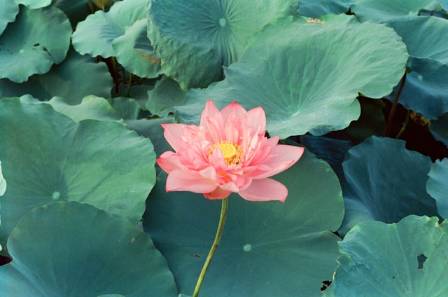
This article explains how to cultivate lotus flowers in a pond, or even in a small container pond placed in a garden, balcony, or terrace.
In aquatic landscaping, lotus flowers are highly valued ornamental plants. Their presence brings a striking exotic and elegant character to any water feature, instantly enhancing its visual appeal.
Lotus plants show remarkable growth. In large varieties, leaves can rise above the water surface to more than 150 cm. Smaller or dwarf types typically grow to about 60–80 cm above the waterline.
These plants are also hardy and tolerant of cold temperatures, making them suitable for outdoor ponds, large tubs, or even compact mini ponds on terraces and patios.
The leaves have a unique surface texture that repels water effectively. Rain or splashes roll off immediately, keeping the foliage dry, clean, and healthy-looking at all times.
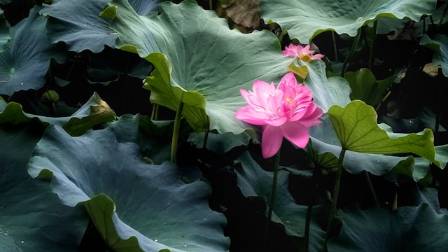
The flowers rise above the leaves and open under full sunlight. Each bloom usually lasts around three days, although multiple flowers may open simultaneously, creating a continuous display.
The flowering season generally extends from June through September, depending on climate conditions and cultivation practices.
Growing containers for lotus plants
Lotus must be grown in full sun to ensure warm water temperatures, ideally around 25°C in summer, which is necessary for successful blooming.
Unlike water lilies, lotus plants produce long underground rhizomes that spread rapidly in multiple directions.
Because of this growth habit, containers used for lotus must have no drainage holes at all, including at the base.
Circular tubs are strongly recommended, since the rhizome naturally expands outward and tends to follow the perimeter of the container over time.
For dwarf varieties, a container about 50 cm wide and 30 cm deep is suitable, with water covering the rhizome by 15–30 cm.
For medium to large varieties, containers between 60 and 120 cm in diameter and around 30 cm deep are ideal, with 20–40 cm of water above the rhizome.
Larger containers encourage stronger growth, bigger leaves, and more abundant flowering. Even dwarf varieties can produce larger blooms when given more space.
Planting the lotus rhizome
In early spring, the lotus rhizome does not yet have active growing tips. It should be fully buried in soil, positioned horizontally like a potato, with any small shoots facing upward.
The growing tips are very fragile. If they break, the rhizome will no longer be viable unless other active points remain intact.
Fill roughly two-thirds of the container with soil, leaving some space at the top to prevent the rhizome from floating out as it develops. For example, in a 30 cm deep pot, about 20 cm of soil is appropriate.
For better growth and flowering, place at least five slow-release fertilizer tablets (such as Osmocote) around the rhizome area before covering it completely with soil.
After fertilizing, gently cover the rhizome with soil, taking care not to damage it.
If planting occurs later in spring, when growth has already started, the active tip should remain above the soil surface.
If young leaves have already emerged, they must stay above the water level, as submerging them may cause the plant to rot.
Once planted, slowly lower the container into the pond, allowing water to enter gradually so the rhizome is not disturbed.
Mini pond cultivation of lotus
Lotus can also be grown without a traditional pond. It can thrive in a large bowl or container placed on a balcony, terrace, or in a small garden setup.
In this case, the container should be filled halfway with soil, the rhizome planted, and then topped up with water until nearly full.
Water levels must be monitored regularly, as lotus plants are sensitive to drying out. Evaporation should be compensated frequently by refilling the container.
Additional information and resources
Lotus varieties are widely available through plant nurseries and online sources specializing in aquatic plants.
More detailed cultivation techniques and guidance on maintaining balanced water gardens can be found in dedicated aquatic plant growing manuals and instructional video courses.
इसी जंगल से और

· hi
अल्पाका ऊन बनाम भेड़ की ऊन: क्या अंतर है?
चैताली
· en
11 Tips to Prepare, Cook and Eat an Artichoke
Moly

· en
Neuschwanstein Castle: A Comprehensive Exploration of Germany’s Fairytale Gem
Logan Matthews
· hi
समुद्री कछुओं के बारे में शीर्ष 10 तथ्य
अनन्या

· en
Luxury Sedans That Inspired Modern Flagships
Parker Stone

· hi
समुद्र की चमकती मुस्कान
एमिली हार्टवेल