फील्ड रिपोर्ट
Crafting Three-Dimensional Landscape Art with Paper and Shadows
This creative project guides you through the process of building a 3D landscape by using paper cut-outs and the interplay of light. Inspired by the natural world around you, this activity transforms traditional flat sketches into structures that inhabit physical space.
Margaret Anne Whitmore
लेखक
प्रकृति नोट
नीचे पूरी वन्यजीव कहानी या रिपोर्ट पढ़ें।
विषय
वन्यजीव
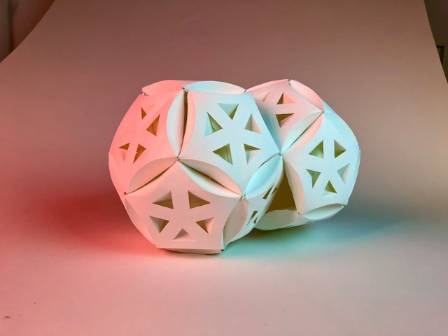
This creative project guides you through the process of building a 3D landscape by using paper cut-outs and the interplay of light. Inspired by the natural world around you, this activity transforms traditional flat sketches into structures that inhabit physical space.
The technique is modeled after a workshop by artist Mary Bourne, who specializes in simplifying complex scenery into bold, manageable shapes. By focusing on silhouettes rather than intricate details, you can create a paper "drawing" that stands on its own and casts its own artistic shadows.
The Relationship Between Sculpture and Silhouette
Sculptors often look for ways to translate the real world into simplified patterns. For example, in her work Shield, Mary Bourne was inspired by the trees at Culloden Moor. She noticed how the shapes of the forestry plantations looked like opposing forces, much like the designs found on traditional Maasai shields.
Even though a sculpture is a solid object, the carved lines on its surface act like a 3D drawing. By using this same logic—taking a tree, a building, or a hill and turning it into a clean outline—you can create a paper sculpture that mimics the depth and drama of a real-life environment.
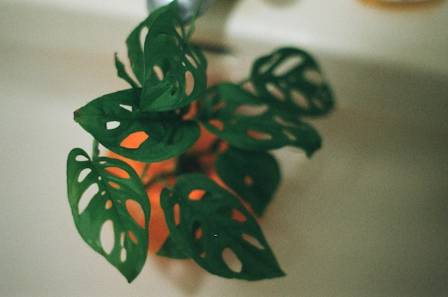
Materials for Your Paper Landscape
To begin your project, gather the following supplies. You likely already have most of these at home or in the classroom.
For the Initial Sketches:
-
Drawing paper.
-
Paintbrushes of various sizes.
-
Ink or a single color of paint (black or blue works best for focusing on shapes).
-
Water pots for mixing.
For the 3D Paper Structure:
-
Stiff paper (A4 size is ideal).
-
A piece of sturdy card for the base (recycled cereal boxes are perfect).
-
Pencil or pen.
-
Scissors.
-
Adhesive tape.
Step-by-Step Guide to Building Your Landscape
1. Create a Preliminary Monochrome Sketch
Start by observing a landscape or townscape. This could be the view from your window or a photograph of a place that is meaningful to you. Use your brush and ink to draw what you see, but keep it simple. Focus on the primary shapes of hills, buildings, or trees rather than fine details. Use water to thin your ink, creating different shades to suggest depth and distance.
2. Identify and Simplify Key Elements
Review your sketches and pick out the most prominent or interesting features, such as a specific row of trees, a fence, or an interesting building. Draw these elements again on a separate piece of paper, focusing purely on their outlines. This simplification process is crucial for making a successful paper cut-out.
3. Design and Cut the Concertina Structure
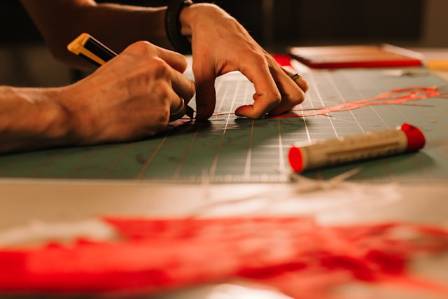
Take a piece of stiff paper and fold it lengthways into even sections, concertina-style (like an accordion). On the top layer, draw the outline of your chosen landscape feature. It is vital that your drawing touches the left and right edges of the fold in several places. Keeping the paper folded, cut around your design. When you unfold it, you will have a continuous "string" of connected, identical shapes.
4. Assemble the Three-Dimensional Scene
Unfold your paper strings and arrange them into circles or layers on your cardboard base. Secure the ends with tape so they stand upright. You can layer different features—perhaps a ring of trees surrounding a small paper house in the center—to create a sense of foreground and background.
5. Use Light to Complete the Artwork
The final step is to introduce light. Place your finished structure near a bright window or use a desk lamp to cast shadows across the base. These shadows act as the "final lines" of your drawing, adding movement and a sense of atmosphere to your 3D paper landscape.
इसी जंगल से और
· hi
पारिस्थितिकी से परे: संस्कृति के केंद्र में पेड़
इश

· hi
परफेक्ट लैटे के मूल सिद्धांत: पसंदीदा एस्प्रेसो के लिए एक गाइड
पल्लवी चटर्जी
· en
8 Expert Tips for Styling Your Sofa Like a Pro
Mike
· hi
बोट-एड के इतिहास के शीर्ष 10 सबसे प्रसिद्ध जहाज
पलक
· hi
दुनिया के सबसे खूबसूरत तटीय शहर
आदित्य

· hi
बंदरों के बारे में 14 रोचक तथ्य
अंजू