फील्ड रिपोर्ट
Interesting Facts About the Eastern Chipmunk
The eastern chipmunk, scientifically named Tamias striatus, is a small, striped rodent native to eastern North America. It holds the distinction of being the only living member of its unique chipmunk group, the genus Tamias. You might be curious about the origin of the word “chipmunk”, it comes from the Ojibwe language, specifically the term “ajidamoo.” This word translates to “one who descends trees headlong,” a fitting description for these agile, quick-moving little animals.
Emily Harris
लेखक
प्रकृति नोट
नीचे पूरी वन्यजीव कहानी या रिपोर्ट पढ़ें।
विषय
वन्यजीव

The eastern chipmunk, scientifically named Tamias striatus, is a small, striped rodent native to eastern North America. It holds the distinction of being the only living member of its unique chipmunk group, the genus Tamias.
You might be curious about the origin of the word “chipmunk”, it comes from the Ojibwe language, specifically the term “ajidamoo.” This word translates to “one who descends trees headlong,” a fitting description for these agile, quick-moving little animals.
What Does an Eastern Chipmunk Look Like?
Eastern chipmunks are small in size. When measuring from nose to the tip of their tail, they grow to around 30 centimeters (12 inches) long. Their weight typically ranges between 66 and 150 grams (2.3 to 5.3 ounces).
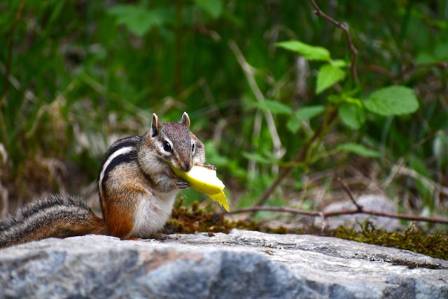
The fur on their upper body has a reddish-brown hue. Along their back, five dark brown stripes stand out clearly against lighter brown stripes, and these stripes extend all the way to their dark-colored tail. The fur on their belly is much lighter in color, creating a noticeable contrast.
They also have a tan stripe that runs from their whiskers down to below their ears, and you can spot light-colored stripes above their eyes too. Eastern chipmunks have four toes on each of their front paws and five toes on each of their back paws.
Where Do Eastern Chipmunks Live?
Eastern chipmunks inhabit deciduous forests—forests where trees shed their leaves each fall. Their range covers the entire eastern United States and parts of southern Canada.
Beyond wild forests, they also make homes in urban parks and even in residential backyards. They prefer areas with features like rocks, piles of logs, or thick bushes, as these spots provide them with ideal places to hide and stay safe from predators.
How Do Eastern Chipmunks Behave?
Eastern chipmunks are skilled tree climbers, but surprisingly, they build their homes underground. Their nests are part of an extensive network of tunnels, and these tunnel systems often have multiple entrances to allow easy escape and access.
To keep their underground homes hidden, chipmunks carry away excavated soil in their cheek pouches. This way, there’s no visible pile of dirt to reveal where they’re digging. They also line the inside of their burrows with leaves, rocks, and sticks, which not only makes the space more comfortable but also helps conceal the burrows further.
Eastern chipmunks produce a variety of sounds. Some of their calls resemble bird chirps, while others are chattering noises. One common sound they make is a fast trill, and another is a lower-pitched clicking sound—each serving a different purpose, like warning others of danger or communicating with fellow chipmunks.
What Do Eastern Chipmunks Eat?
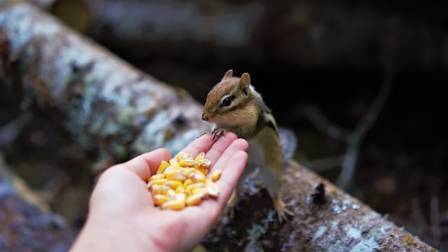
Eastern chipmunks are diurnal, meaning they’re most active during the day. A large portion of their daytime hours is spent searching for food. Their diet is varied: they love eating bulbs, seeds, fruits, and nuts.
They also enjoy munching on green plants, mushrooms, insects, worms, and even bird eggs. Like other chipmunk species, eastern chipmunks have special cheek pouches. These expandable pouches let them carry large amounts of food back to their burrows at once, so they can store it for later use.
Eastern Chipmunk Life Cycle
Eastern chipmunks are mostly solitary animals, meaning they live alone for most of the year. They only interact with other chipmunks during the mating season.
Female eastern chipmunks typically have one or two litters of offspring each year, with each litter containing about three to five baby chipmunks. The main breeding periods occur twice a year: once from February to April, and again from June to August.
During winter, eastern chipmunks may enter a state of torpor, a long period of deep sleep. Unlike true hibernation, torpor is a lighter rest state; they wake up periodically to eat food they stored away before the cold months began.
Eastern chipmunks face threats from many predators, including hawks, owls, foxes, raccoons, snakes, weasels, coyotes, bobcats, and lynx. Even domestic pets like dogs and cats can pose a danger to them.
In the wild, eastern chipmunks usually live for three years or more. However, when kept in captivity such as in zoos, they can live much longer, sometimes reaching up to eight years of age.
Conclusion
The eastern chipmunk is a fascinating small mammal, with unique physical traits, behaviors, and a well-adapted life cycle that helps it thrive in eastern North America’s diverse habitats from forests to backyards. Its ability to climb trees, dig complex underground burrows, and store food for winter shows remarkable adaptability. While it faces many predators, its quick movements and hiding skills help it survive in the wild. Learning about these little creatures not only lets us appreciate their role in the ecosystem but also highlights the charm of the small wildlife that shares our surroundings.
इसी जंगल से और
· hi
मुख्य विचार: क्या जानवरों में भावनाएं होती हैं?
गौरी

· en
What Is an Infinity Pool? Size, Cost, and More
Atlas Waverly

· hi
2025 के बाजार में 10 सबसे आरामदायक कारें
विष्णु

· hi
12 शार्क जिन्हें आपको जानना चाहिए
आरती

· en
Complete guide to peace lily care
Eva Harrison

· hi
पास्ता से जुड़े रोचक सत्य और परंपराएँ
अंकुर सेठी