फील्ड रिपोर्ट
Exploring Ice Caves
Located in eastern Nevada, Great Basin National Park is a surprising place filled with snow, mountains, and underground wonders. The name “Nevada” comes from Spanish and means “snow-covered,” which may seem unexpected because the state is often associated with the hot deserts of Las Vegas.
Victoria Langley
लेखक
प्रकृति नोट
नीचे पूरी वन्यजीव कहानी या रिपोर्ट पढ़ें।
विषय
वन्यजीव
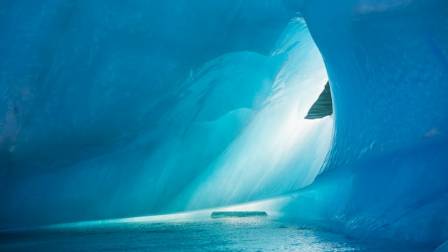
Located in eastern Nevada, Great Basin National Park is a surprising place filled with snow, mountains, and underground wonders. The name “Nevada” comes from Spanish and means “snow-covered,” which may seem unexpected because the state is often associated with the hot deserts of Las Vegas.
Although much of Nevada is known for its dry climate, some areas at higher elevations receive heavy snowfall every year. While the Sierra Nevada mountains are often the first snowy landscape people think of, Great Basin National Park on the opposite side of the state is another remarkable winter environment. The park contains Wheeler Peak, Nevada’s second-highest mountain at approximately 13,063 feet, and is also home to around 40 known caves.
Lehman Caves and Great Basin’s Frozen Underground World
Among all the caves in the park, Lehman Caves is the most famous and easiest to access. Visitors can drive almost directly to its entrance, which sits at an elevation of about 6,800 feet. Inside, the cave maintains a comfortable temperature of around 50°F (10°C).
However, several other caves in the park are located at much higher elevations and remain cold enough to preserve ice throughout the year. These ice caves have become the focus of research and monitoring efforts involving park employees, volunteers, and scientific projects aimed at documenting their condition and changes over time.
Long Cold Cave: A Changing Ice Environment
Long Cold Cave can be reached after an enjoyable hike of about an hour from the campsite, offering impressive views along the way. The cave extends roughly 390 feet underground and is mostly vertical, requiring careful rope descents through multiple sections.
At the bottom of the first 130-foot entrance drop, visitors can see noticeable changes caused by seasonal melting and freezing cycles. Over recent years, researchers have observed a significant reduction in the amount of ice throughout the cave.
A decade ago, much of Long Cold Cave could be explored using ice screws and ice-based anchors. Today, much of that ice has disappeared or become too thin to support the same methods, requiring the use of permanent bolted anchors instead. The lowest chamber remains heavily frozen because of seasonal ice accumulation from above, but conditions continue to change each year. Some years, meltwater has even collected into pools on the cave floor.
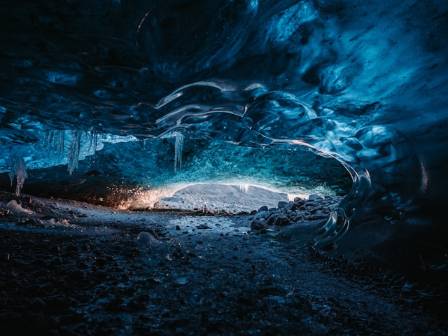
Deep Fall Cave and Its Massive Ice Formations
Deep Fall Cave requires a much longer journey, taking approximately three hours to reach from camp. The route crosses mountainous terrain and follows cliffside paths once used by bighorn sheep.
The cave descends more than 120 feet below the surface. After crossing a large snowfield near the entrance, explorers descend onto a snowy floor before reaching the Great Room, where snow gradually transforms into ice.
Further below, a layered ice formation can be found containing natural materials such as pine needles and woodrat remains trapped within it. The cave eventually reaches its final chamber, where a massive ice column dominates the space. The size and shape of this ice pillar change depending on whether the surrounding floor is completely frozen or partially melted.
Monitoring Temperature and Humidity Changes
To better understand these frozen caves, Great Basin National Park uses HOBO ProV2 data loggers to record temperature and humidity conditions. These instruments are programmed to collect information every one to two hours over several years.
The devices are placed at different depths within the caves, allowing scientists to compare conditions from the entrance areas, through the dimly lit transition zones, and into the deepest sections.
One important discovery is that temperatures inside these caves are gradually approaching 0°C (32°F). A small temperature increase may seem insignificant, but in caves containing large amounts of ice, even minor warming can create major changes. Researchers are already witnessing the effects of this warming trend.
Studying Ancient Ice Before It Disappears
Some sections of the cave ice contain multiple layers, suggesting that the formations developed over many years. Scientists recognize the importance of studying these frozen records before they are lost.
The park has collaborated with Dr. Jeff Munroe of Middlebury University, a leading American researcher specializing in cave ice. He provided specialized drilling equipment that allowed scientists to collect ice samples more efficiently.
The park has also worked with the Department of Geography and the Byrd Polar and Climate Research Center at The Ohio State University to establish methods for safely collecting samples from these remote underground environments.
Collecting and Analyzing Ice Samples
During a September research expedition, cave specialists from the National Park Service, the U.S. Forest Service, and the Great Basin Institute’s Wild Cave Crew spent a week working at high elevation.
The team hiked to the caves, descended into the underground chambers using ropes, drilled into the ice formations, photographed the conditions, and collected ten samples from Long Cold Cave and Deep Fall Cave.
After collection, the ice samples were carefully melted while remaining refrigerated before being transported to Ohio State University. Researchers and students are now analyzing them through studies of isotopes, chemical elements, and microorganisms to uncover more information about the history preserved inside the ice.
Exploring the Secrets Hidden Beneath Great Basin
Reaching these frozen caves is challenging, but the information stored within their ice formations may reveal valuable clues about past climates and environmental changes.
Deep beneath Nevada’s mountains, these rare ice caves serve as natural archives of Earth’s history. Sometimes understanding what is happening above requires traveling far below the surface.
इसी जंगल से और
· hi
यू.एस. में 3 सबसे खूबसूरत हाइक
ग्रेसन हावर क्यूरिन
· hi
दुनिया भर की 20 सबसे शानदार बिग वॉल क्लाइंब
युवराज

· hi
समुद्र की चमकती मुस्कान
एमिली हार्टवेल

· en
Stir-fried Seasonal Vegetables
Dashiell Gray

· en
10 Cute Dog Breeds With Sweet Personalities
Steven Scott

· en
Essential Strategies for Selecting and Wearing Women's Canvas Footwear
Keith Norwood