फील्ड रिपोर्ट
Moon and Earth: A Powerful Cosmic Connection
The Earth and Moon share one of the most important relationships in our solar system. Bound together by gravity, the Moon travels around Earth in a stable orbit, illuminating the night sky and influencing many natural processes on our planet. While Earth is rich with life, oceans, and an atmosphere, the Moon is a barren rocky world marked by countless craters and ancient lava plains. Together, they form a dynamic system that affects tides, seasons, and the long-term stability of Earth.
Julian Brooks
लेखक
प्रकृति नोट
नीचे पूरी वन्यजीव कहानी या रिपोर्ट पढ़ें।
विषय
वन्यजीव
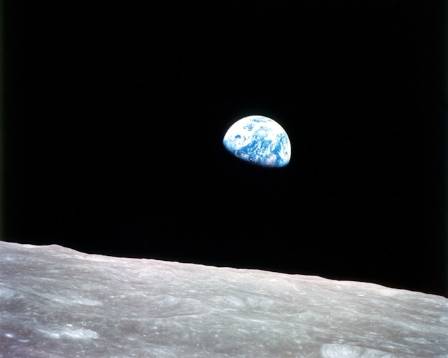
The Earth and Moon share one of the most important relationships in our solar system. Bound together by gravity, the Moon travels around Earth in a stable orbit, illuminating the night sky and influencing many natural processes on our planet. While Earth is rich with life, oceans, and an atmosphere, the Moon is a barren rocky world marked by countless craters and ancient lava plains. Together, they form a dynamic system that affects tides, seasons, and the long-term stability of Earth.
Scientists have proposed several explanations for how the Moon formed. The most widely accepted idea suggests that a massive collision early in Earth's history created the material that eventually became the Moon. Today, lunar exploration continues to expand our understanding of space and may eventually support permanent human settlements beyond Earth. The Earth-Moon system remains one of the most important subjects in astronomy and planetary science.
An inspiring view of Earth and the Moon, showcasing their gravitational connection and cosmic balance.
Moon and Earth
Characteristics
Earth and the Moon differ greatly in terms of geology, environment, and biological conditions. Earth is an active planet covered with water, protected by a thick atmosphere, and home to an incredible diversity of life. The Moon, by contrast, is an airless rocky body with a surface dominated by impact craters, rugged highlands, and frozen volcanic regions.
Although much smaller than Earth, the Moon exerts a powerful gravitational influence. Its attraction affects Earth's tides and contributes to the stability of Earth's rotational axis. Earth reflects sunlight and experiences seasonal cycles, while the Moon reflects solar light back toward Earth, making it visible during the night.
The historical significance of both worlds is immense. Earth is the birthplace of all known life, while the Moon has become a major focus of space exploration. Numerous missions have visited the lunar surface, and future plans include establishing human bases there. Research involving both bodies continues to reveal important insights about planetary evolution and the history of the solar system.
Earth’s Rotation and Orbit
Earth constantly spins on its axis while simultaneously traveling around the Sun. One complete rotation takes approximately 24 hours, creating the cycle of day and night. Its journey around the Sun requires about 365.25 days, forming the basis of the calendar year.
This orbital motion is responsible for seasonal changes. As Earth moves around the Sun, different regions receive varying amounts of sunlight, causing shifts in temperature and climate. Polar areas experience extended periods of darkness or daylight, while equatorial regions receive more consistent solar energy throughout the year.
The balance between gravity and rotational forces helps maintain Earth's stability. These movements influence weather systems, ocean circulation, and biological cycles. Understanding Earth's motion is essential for climate research, navigation, and modern astronomy.
Moon
Characteristics
The Moon possesses several unique astronomical and geological properties. Unlike Earth, it has no substantial atmosphere, meaning there is no weather, rainfall, or wind erosion. Its landscape consists mainly of craters, mountain ranges, and dark volcanic plains known as maria.
The Moon's gravitational pull plays a crucial role in generating Earth's ocean tides. Temperatures on the lunar surface vary dramatically, becoming extremely hot during daylight and intensely cold during the lunar night.
The Moon also holds great scientific value. Human missions, particularly those of the Apollo program, transformed our understanding of lunar geology. Future exploration efforts aim to establish long-term scientific facilities that could support deeper investigations into the Moon and the broader solar system.
Moon’s Role
The Moon serves an essential function in maintaining Earth's environmental stability. Its gravity drives tidal cycles, producing regular rises and falls in ocean water levels. It also helps stabilize Earth's axial tilt, contributing to relatively predictable seasons.
Moonlight brightens Earth's nights by reflecting sunlight. Because the Moon lacks an atmosphere, temperature fluctuations on its surface are severe, creating challenging conditions for future exploration. Nevertheless, studying its terrain and resources remains a key objective for scientists.
Lunar exploration has become a major milestone in human space achievement. Apollo missions collected valuable samples and data that continue to support scientific discoveries today. Future lunar settlements could serve as stepping stones for deeper space exploration.
The Earth-Moon Connection
Formation
Several hypotheses have been proposed to explain the Moon's origin. The leading explanation is the Giant Impact Theory. According to this model, approximately 4.5 billion years ago, a Mars-sized object collided with the young Earth. Debris from the impact entered orbit and gradually combined to form the Moon.
Alternative ideas include the Capture Theory, which suggests the Moon formed elsewhere and was later captured by Earth's gravity. However, current scientific evidence strongly favors the giant impact scenario because it best explains the similarities between Earth and lunar materials.
Following its formation, the Moon experienced intense bombardment from asteroids and comets, producing the many craters visible today. Understanding the Moon's formation provides important clues about the early history of the solar system.
Gravitational Effects
The gravitational interaction between Earth and the Moon is responsible for ocean tides. The Moon's pull causes water levels to rise and fall across the globe. Although the Sun also contributes to tidal forces, the Moon has the stronger influence because of its proximity to Earth.
The Moon's gravity also affects Earth's rotation and helps stabilize its axis. Without this stabilizing effect, Earth's climate could experience far more dramatic changes over long periods.
Scientists have discovered that the Moon is gradually drifting away from Earth at a rate of several centimeters each year. This slow separation may eventually influence Earth's rotation and tidal behavior. Ongoing studies continue to improve our understanding of these long-term changes.
Exploration
Exploration of the Moon represents one of humanity's greatest scientific achievements. The Apollo missions, beginning with the historic lunar landing in 1969, allowed astronauts to walk on the surface and return valuable samples to Earth.
Today, space agencies around the world continue to investigate the Moon. Programs led by organizations such as NASA, China, and other international partners are studying lunar resources, water deposits, and suitable locations for future bases.
Because of its relative closeness, the Moon serves as an ideal destination for testing technologies needed for future missions to Mars and beyond. Continued lunar research is opening new possibilities for long-term human exploration of space.
Real-Time Exploration Experience
Modern technology has transformed the way scientists study the Moon. During Apollo missions, astronauts conducted experiments, collected rock samples, and experienced firsthand the unique conditions of the lunar environment.
Current robotic missions, including China's Chang'e program and NASA's Artemis initiative, gather data directly from the lunar surface. These missions search for water ice, study mineral deposits, and investigate environmental conditions that could support future human habitation.
Plans for permanent lunar habitats are actively being developed. Future astronauts may live and work on the Moon for extended periods, conducting research that benefits both Earth science and deep-space exploration.
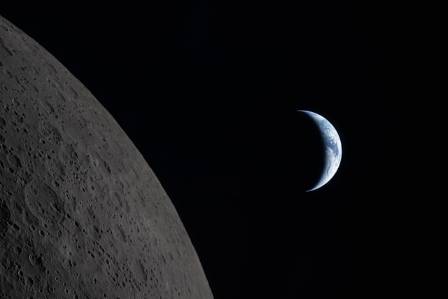
An impressive image showing Earth and the Moon together, highlighting their enduring gravitational relationship.
Moon and Earth
Case Studies
Numerous lunar missions provide valuable examples of scientific progress and exploration success. Apollo 11 remains one of the most significant case studies in human history, marking the first time humans walked on another world. The mission collected geological samples and expanded our understanding of the Moon's environment.
China's Chang'e 5 mission is another important example. By returning lunar samples to Earth, scientists gained fresh insights into the Moon's composition, geological history, and available resources. Such studies help guide future exploration strategies and settlement plans.
Countries around the world continue to analyze the Moon's environment, gravity, and geological features. These investigations support advances in space technology and contribute to our growing knowledge of how humans might live and work beyond Earth.
Frequently Asked Questions
What is Earth's Moon?
The Moon is Earth's only natural satellite. It orbits our planet at an average distance of approximately 385,000 kilometers. Because Earth and the Moon are tidally locked, the same lunar hemisphere always faces Earth.
Where is the Moon right now?
The Moon's position constantly changes as it travels around Earth. Real-time tracking systems and astronomy applications can provide its exact location and visibility from any point on Earth.
Five Interesting Facts About the Moon
We always see the same side of the Moon because of synchronous rotation.
Its gravitational pull creates ocean tides on Earth.
The Moon is slowly moving away from Earth by about 3.8 centimeters each year.
It has virtually no atmosphere, exposing its surface to impacts and extreme temperatures.
Only twelve astronauts have walked on the Moon, all during the Apollo missions.
What Is the Moon’s Official Name?
Earth's natural satellite is simply called "the Moon." In ancient Roman tradition it was known as Luna, while Greek mythology referred to it as Selene.
Does Earth Have Three Moons?
Earth has only one true natural satellite. Some asteroids temporarily share Earth's orbital region or become briefly captured by gravity, but they are not permanent moons.
What Was Earth's First Geological Era?
The earliest stage of Earth's history is known as the Hadean Eon, beginning around 4.6 billion years ago. During this time, Earth was extremely hot and frequently struck by asteroids and comets. The Moon likely formed during this era.
What Is the Moon's Current Phase?
The Moon continuously progresses through different phases during its monthly cycle. Its exact phase depends on the date and time of observation.
Is There Another Moon Around Earth?
Occasionally, small asteroids become temporary companions of Earth and are sometimes called mini-moons. However, they eventually leave Earth's gravitational influence and do not qualify as permanent natural satellites.
Why Is the Moon Special?
The Moon is unique because it stabilizes Earth's rotation, drives tides, influences ecosystems, experiences moonquakes, and serves as humanity's primary gateway to deep-space exploration.
Conclusion
The relationship between Earth and the Moon is founded on a remarkable gravitational partnership that influences tides, planetary rotation, and seasonal stability. Research into the Moon continues to unlock new scientific discoveries and expand humanity's understanding of the cosmos.
Studies of lunar formation and surface composition provide valuable insights into the history of the solar system. Historic missions such as Apollo, along with modern programs like Artemis, are increasing the possibility of future human settlements on the Moon. Investigating the Moon's geology and resources also helps scientists better understand Earth's own evolution and environmental balance.
In the years ahead, the Moon may become a major center for scientific research, technological development, and human exploration. Its potential resources, including water ice and useful minerals, could support future missions deeper into space. The ongoing study of Earth and the Moon will remain essential to understanding both our solar system and humanity's future among the stars.
इसी जंगल से और

· en
Three Lesser-Known Wolf Species You Might Not Be Familiar With
James Anderson

· en
How to Paint a Watercolor Swan
Daniel Brooks

· hi
लैपलैंड में सर्दी – चरम स्थितियों के लिए तैयार
योगेश

· en
16 Nature Plants That Feel Like Magic
William Thomas Jones

· hi
अमेरिका में नंगी आँखों से तारों को देखने के लिए 13 सर्वश्रेष्ठ स्थान
ख्याति

· hi
फ्लेमिंगोस गुलाबी क्यों हैं? और अन्य फ्लेमिंगो तथ्य
भावना