फील्ड रिपोर्ट
Bionic Hands in Action
A bionic hand is a powered artificial limb created to replace a missing human hand. Unlike conventional prosthetic devices such as cosmetic hands or body-operated hooks, bionic hands contain electronic systems, motors, and computer processors. These components allow the device to move actively and imitate many of the functions of a natural hand.
Lily Monroe
लेखक
प्रकृति नोट
नीचे पूरी वन्यजीव कहानी या रिपोर्ट पढ़ें।
विषय
वन्यजीव
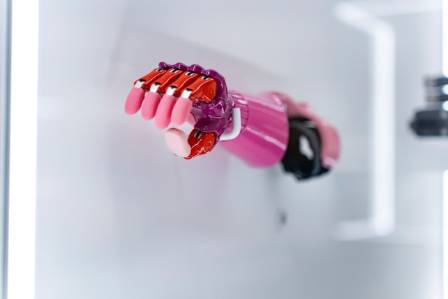
A bionic hand is a powered artificial limb created to replace a missing human hand. Unlike conventional prosthetic devices such as cosmetic hands or body-operated hooks, bionic hands contain electronic systems, motors, and computer processors. These components allow the device to move actively and imitate many of the functions of a natural hand.
Modern bionic hands are built from lightweight yet durable materials and operate using rechargeable battery systems. Their biggest advantage is their ability to convert a user’s intended movement into real mechanical action through advanced electronic controls. Rather than simply restoring appearance, these prostheses are designed to return functional movement and improve independence in daily life.
How Bionic Hands Are Operated
Most bionic hands rely on a system called myoelectric control. Inside the prosthetic socket — the section fitted around the remaining part of the user’s arm — small electrodes detect electrical activity produced by muscle contractions. When a user tightens certain muscles, tiny bioelectrical signals are generated and sent to a built-in microprocessor.
The processor interprets these signals and directs motors inside the prosthetic hand to perform specific actions. One muscle movement may command the hand to open, while another may cause it to close. Learning to control these signals takes practice, since users must train themselves to activate muscles separately and consistently.
For people with amputations higher on the arm, a more advanced surgical approach known as Targeted Muscle Reinnervation (TMR) can improve control. In this procedure, nerves that originally controlled the missing hand are redirected into remaining muscles in areas such as the chest or upper arm. Once the nerves reconnect with the new muscle tissue, thinking about moving the absent hand causes those muscles to contract.
Electrodes placed over these muscles can then capture stronger and more precise signals, allowing smoother and more natural movement control. The redirected muscles effectively act as amplifiers for nerve communication. Researchers are also developing Brain-Computer Interfaces (BCIs), which aim to control prosthetic limbs directly through signals from the brain.
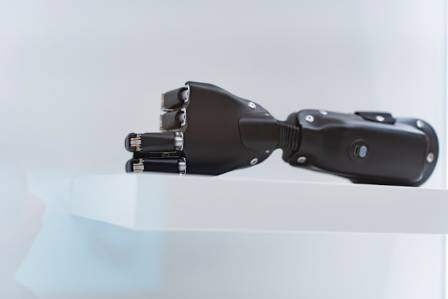
Functions and Abilities of Modern Bionic Hands
Today’s bionic hands are designed with impressive dexterity, grip strength, and movement versatility. Many models include individually powered fingers along with a movable thumb, enabling users to perform both powerful and delicate tasks.
Different grip configurations can be programmed into the device for specific activities. For example, a power grip allows all fingers to wrap around larger objects like bottles or bags. A tripod grip uses the thumb together with the index and middle fingers to hold items such as pens or utensils. Precision grips, including pinching motions, make it possible to handle smaller objects like coins, keys, or cards.
Many devices also include adaptive gripping technology. Sensors measure how much pressure is needed and automatically adjust the force applied. Fragile items receive lighter pressure, while heavier objects trigger stronger gripping power for stability. Some systems additionally support proportional speed control, enabling users to vary movement speed for more fluid and natural actions.
These combined features allow people to complete everyday activities such as carrying groceries, buttoning clothing, or tying shoelaces.
To keep the prosthesis both strong and lightweight, manufacturers often use materials like carbon fiber. Certain models are also designed with water-resistant protection for use in a wider range of environments.
Adding the Sense of Touch
One of the most exciting areas of prosthetic development is sensory feedback technology, which helps users receive physical information from the artificial hand.
Tiny sensors located in the fingers and palm can detect contact and pressure when touching objects. That information is then converted into signals the user can feel elsewhere on the body, usually through vibrations applied to the skin of the residual limb.
In many systems, small vibration motors inside the prosthetic socket create feedback sensations. Stronger vibrations may indicate a tighter grip, while softer vibrations suggest lighter contact. This allows users to judge how firmly they are holding something without constantly watching the prosthetic hand.
The feedback system improves precision and reduces accidents such as dropping or crushing delicate objects. Some wearable systems use separate vibration points corresponding to individual fingers. Researchers are continuing to explore more advanced sensory experiences, including temperature and texture perception.
The Process of Getting a Bionic Hand
Receiving a bionic hand involves several stages and usually requires support from multiple medical specialists.
The process begins with an evaluation to determine whether the individual is a good candidate for the technology. Doctors and clinicians assess factors such as the condition of the residual limb, physical health, lifestyle, and personal goals before recommending a suitable prosthetic system.
Once a device is chosen, a prosthetist creates a custom socket tailored to the user’s body. This may involve detailed measurements or a 3D scan to ensure comfort and stability. Because the socket serves as the connection between the body and the prosthesis, a proper fit is essential for long-term success.
After fitting the device, rehabilitation and training begin. Physical and occupational therapists help users strengthen the muscles needed for myoelectric control and practice operating the different grip modes. Users gradually learn how to incorporate the prosthetic hand into everyday tasks and routines.
This adjustment period can last several months, requiring patience, repetition, and consistent training before the user becomes fully comfortable and confident with the technology.
इसी जंगल से और

· hi
समुद्र तट आपके मानसिक स्वास्थ्य के लिए क्यों अच्छा है?
अंशुल

· hi
कला और प्रौद्योगिकी के प्रतिच्छेदन की खोज करने वाले 5 दृश्य कलाकार
केयूर

· en
Subtly Sweet Chinese Pastries And Desserts
Kieran Frost

· en
The Bund, Shanghai
Olivia Grace Carter

· hi
जापान में स्कीइंग के लिए आपकी आवश्यक मार्गदर्शिका
अजय

· hi
श्रिम्प के हेल्थ बेनिफिट्स
चेतन